Visualizzazione post con etichetta castelli di sicilia. Mostra tutti i post

sabato 22 aprile 2023

Qalat, i "castelli arabi" di Sicilia - Those "arab castles" in Sicily


PHOTO SICILIA MC


Li accomuna una parola, un termine con una radice araba - qalat - che sta per "castello". Oggi molti di quegli antichissimi castelli non esistono più e rimane solo quel nome a ricordarli. Un nome che però cambia, che si adegua alle caratteristiche del territorio, o delle storie umane di chi lo abita. La Sicilia è piena di questi "castelli arabi", di città e paesini chiamati Calta- o Calat- e che sono stati, un tempo, piccoli regni autonomi. Sono tantissimi, disseminati per l'isola, ma alcuni sono ormai famosi in tutto il mondo, grazie al turismo. Sapevate di aver visitato il "castello delle donne"? O di essere passati in macchina dal Palazzo di Eufemio? O ancora di aver ammirato il panorama del "castello delle querce"? Scoprite dove e quando ciò è avvenuto.

CALTAGIRONE (qalat al-girani) è sicuramente la più famosa. Nella foto in alto vedete la spettacolare scalinata di oltre 100 gradini decorati con le ormai mitiche ceramiche tipiche del posto. La terracotta con cui da millenni si producono queste meraviglie, a Caltagirone, arriva da antiche grotte e fosse, e infatti il suo nome arabo significa "il castello delle grotte". Secondo altre fonti invece significa semplicemente "il castello di Gelone" con riferimento al noto tiranno greco gelese che pare avesse qui una residenza.

CALTANISSETTA (qalat al-nisa) era anticamente un harem molto importante, conosciuto in tutta l'isola. Il suo nome infatti significa "castello delle donne". Ma questo tranquillo capoluogo, addormentato tra campi di grano e chiese barocche fu fondato da bizantini provenienti dall'Anatolia (detta anche Nixa) e quindi forse il nome arabo significa soltanto "castello dei nixeni". Lasciamo al vostro romanticismo la scelta!

CALTAVUTURO (qalat vultur) è una cittadina in provincia di Palermo abbellita da chiese e palazzi medievali. Sopra i tetti di queste costruzioni volteggiano rapaci, forse anticamente anche avvoltoi "vulturi", da cui il nome "castello degli avvoltoi".

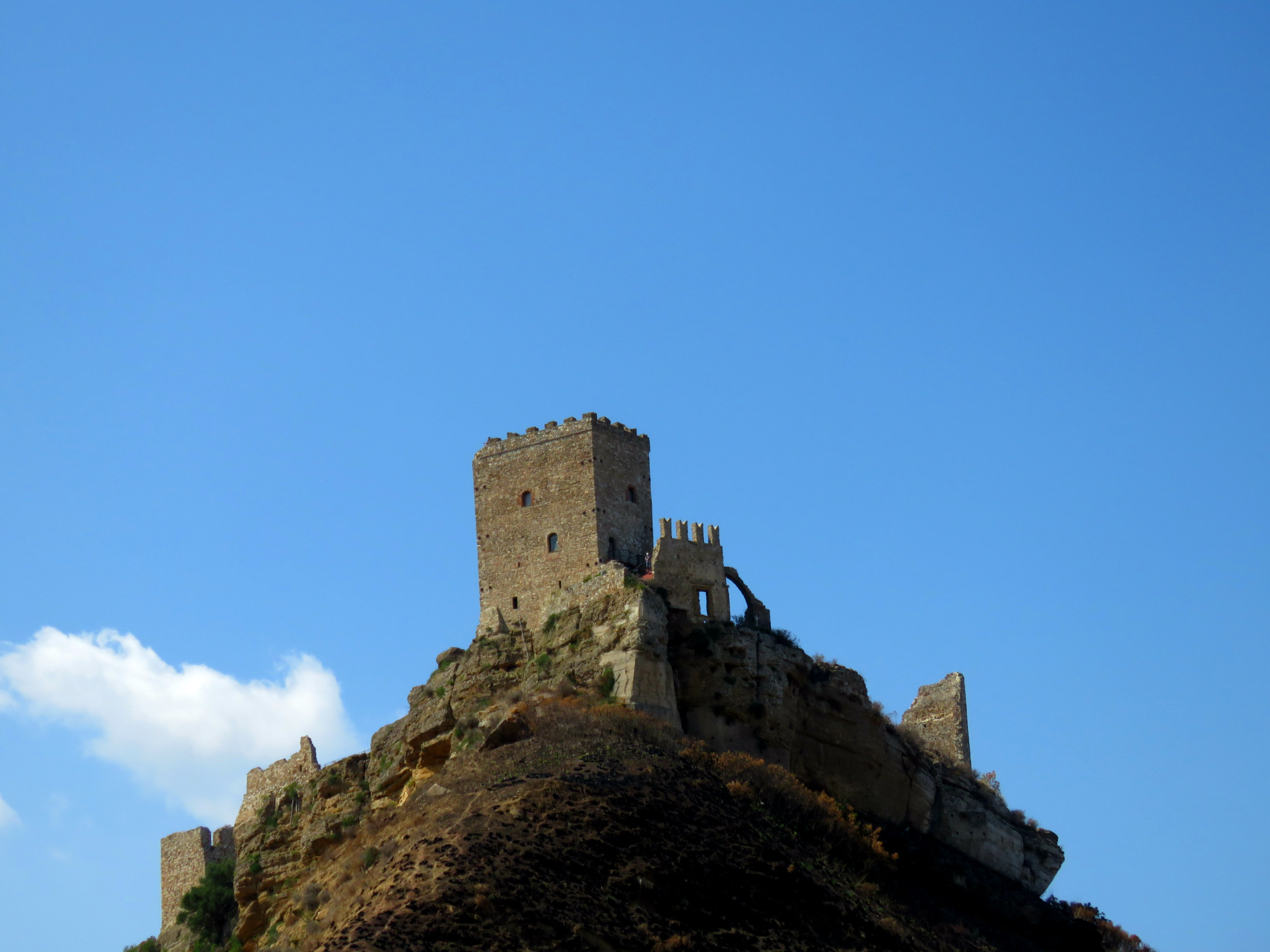
CALTABELLOTTA (qalat al-ballut....vedi foto in basso) è il "castello delle querce" in provincia di Agrigento. Famoso per il trattato di pace che nel 1302 pose fine alle violenze dei Vespri contro i francesi, oggi vanta bellissime necropoli di epoca Sicana nel suo territorio. 

CALATAFIMI (qalat al-fmi) o "il castello di Eufemio" è la cittadina del trapanese che fa capo ai meravigliosi scavi di Segesta. Non si sa chi fosse questo Eufemio, già noto qui al tempo dei Bizantini, ma oggi i turisti arrivano per ammirare templi, teatri antichi e palazzi storici di rara bellezza.

CALATABIANO (qalat Bian) o "il castello di Biano" sorge tra Catania e Taormina, e domina il mare con i ruderi dell'antico maniero e un piccolo santuario dalla cima della collina. In estate viene preso d'assalto per le sue spiagge chilometriche che anticipano la bellezza di quelle taorminesi.

CALASCIBETTA (qalat al-shibitt) si trova di fronte alla città gemella di Enna e un tempo doveva essere profumata, dato che il suo nome sta per "castello di aneto". Si passa di qui andando da Enna a Piazza Armerina, per ammirare il centro storico ricco di chiese antiche e le necropoli bizantine sparse nei suoi dintorni.


PHOTO TIBERIO FRASCARI

They all have one word in common, a term with an Arabic root -
qalat - which stands for "castle". Today many of those ancient castles no longer exist and only that name remains to remember them. A name that changes, however, and adapts to the characteristics of the territory, or to the human stories of those who live there. Sicily is full of these "Arab castles", of cities and towns called Calta- or Calat-  which were once small autonomous kingdoms. There are many, scattered around the island, but some are now famous all over the world, thanks to tourism. Did you know that you have visited the "castle of women"? Or you have driven by the Palace of Euphemius? Or even you have admired the panorama of the "castle of oaks"? Find out where and when this happened. 

CALTAGIRONE (qalat al-girani) is certainly the most famous. In the main photo you see the spectacular staircase of over 100 steps decorated with the now legendary ceramics typical of the place. The terracotta with which these wonders have been produced for thousands of years, in Caltagirone, comes from ancient caves and pits. In fact its Arabic name means "the castle of the caves". According to other sources, however, it simply means "the castle of Gelon" with reference to the well-known Greek tyrant from Gela who apparently had a residence here. 

CALTANISSETTA (qalat al-nisa) was once a very important harem, known throughout the island. In fact, its name means "castle of women". But this quiet capital, asleep among wheat fields and baroque churches, was founded by Byzantines from Anatolia (also called Nixa) and therefore perhaps the Arabic name only means "castle of the Nixens". We leave the choice to your personal romance! 

CALTAVUTURO (qalat vultur) is a town in the district of Palermo embellished with medieval churches and palaces. Above the roofs of these buildings, birds of prey hover. Perhaps in ancient times also "vulturi" - vultures - did fly here, hence the name "castle of the vultures". 

CALTABELLOTTA (qalat al-ballut ... see small photo above) is the "castle of oaks" in the district of Agrigento. Famous for the peace treaty which in 1302 put an end to the violence of the Vespers War against the French, today it boasts beautiful necropolises from the Sican age in its territory. 

CALATAFIMI (qalat al-fmi) or "the castle of Euphemius" is the town in the Trapani area to which  the wonderful archaegological site of Segesta belong. It is not known who this Euphemius was, already known here at the time of the Byzantines, but today tourists come to admire temples, ancient theaters and historic buildings of rare beauty. 

CALATABIANO (qalat Bian) or "the castle of Biano" rises between Catania and Taormina, and dominates the sea with the ruins of the ancient castle and a small sanctuary from the top of the hill. In summer it is besieged for its kilometer-long beaches that anticipate the beauty of those of Taormina. 

CALASCIBETTA (qalat al-shibitt) is located in front of the twin city of Enna and once must have been perfumed, since its name stands for "castle of dill". You pass through this place while going from Enna to Piazza Armerina, and you shall admire the historic center full of ancient churches or the Byzantine necropolis scattered around its territory.

venerdì 9 ottobre 2020

Terme Islamiche di Cefalà Diana - The Arab Bath


photo SICILIA MC   2020


Perfino per i siciliani questo nome - Cefalà Diana - è un mistero. Molti non lo avevano mai sentito nominare prima d'ora, eppure in questo minuscolo comune del palermitano (1000 abitanti appena) sorge l'unica testimonianza dell'utilizzo di bagni termali anche in epoca araba.

Si sospettava che gli arabi di Sicilia usassero le terme, ereditate dalla tradizione romana, ma non erano rimaste prove evidenti di questo costume. Gli scavi condotti appena fuori dall'abitato di Cefalà Diana, invece, hanno riportato alla luce un edificio straordinario. Strutturato esattamente come le antiche terme romane - con una vasca per il bagno caldo, una per il bagno freddo e una intermedia - l'edificio dei cosiddetti "Bagni" presenta una splendida architettura islamica. Sicuramente il convogliamento delle acque termali è opera dei romani, ma le mura, le finestre, la volta che copre le vasche sono tipicamente orientali.

Gli studi condotti sui ritrovamenti hanno confermato che quelle terme erano utilizzate in epoca araba, dunque tra il IX e l'XI secolo, elemento che le rende un monumento prezioso e unico. Una curiosità: le acque termali sgorgano dal terreno a 38°C ma oggi vengono immesse nelle vasche tramite un complesso sistema di tubature moderne, che toglie un po' di magia! 


L'accesso è gratuito, ma non sempre è possibile visitarle. Bisogna attendere alcuni eventi particolari in favore del patrimonio culturale (Le Primavere del FAI, le Vie dei Tesori) oppure prenotare per tempo presso il Comune. Gratis anche l'ingresso al bellissimo castello normanno, situato a pochi chilometri di distanza dalle terme. Del maestoso edificio situato sul  Pizzo Chiarastella (670 metri) resta in piedi, ed è visitabile, solo il torrione (donjon) centrale.

Per raggiungere Cefalà Diana: tramite autostrada A19 Palermo-Catania, uscendo o ad Altavilla Milicia oppure a Casteldaccia: la distanza da entrambi i caselli è di 17 km, seguendo le indicazioni verso Agrigento. (foto a cura di Sicilia Muse Culture)


Even for Sicilians this name - Cefalà Diana - is a mystery. Many had never heard of it before, yet in this small town in the Palermo area (just 1000 inhabitants) there is the only evidence of the use of thermal baths even in the Arab age. Scholars suspected that the Arabs of Sicily used the baths, inherited from the Roman tradition, but there was no clear evidence of this custom. The excavations conducted just outside the town of Cefalà Diana, on the other hand, have brought to light an extraordinary building. Structured exactly like the ancient Roman baths - with a hot pool, a cold pool and an intermediate one - the building of the so-called "Bagni" features splendid Islamic architecture. It is sure that the conveyance of the thermal waters is the work of the Romans, but the walls, the windows, the vault that covers the pools were completed later in a typically oriental style.

Studies conducted on the findings have confirmed that those baths were used in the Arab era, therefore


between the 9th and 11th centuries. An element, this one, that makes them a precious and unique monument. A funny curiosity: the thermal waters come to surface at 38 ° C but today they are introduced into the pools through a complex system of modern pipes, which takes away a bit of the magic! Entrance is free, but it is not always possible to visit them. You have to wait for some special events in favour of cultural heritage (The Spring Events of the FAI association, the Vie dei Tesori...) or book in time by contacting  the local Municipality. The entrance to the beautiful Norman castle, located a few kilometers away from the thermal baths, is also free. Of the majestic building on top of Pizzo Chiarastella (670 meters h.), only the central tower
(donjon) remains standing and can be visited.

To get to Cefalà Diana: drive along the A19 Palermo-Catania motorway, exit either at Altavilla Milicia or at Casteldaccia. The distance from both to Cefalà Diana is 17 km, following the signs towards Agrigento. (all photos by Sicilia Muse Culture)

domenica 27 settembre 2020

Comitini, il fantasma di Federico - The king's ghost


photo SICILIA M.C.


Nessuno passa da Comitini, piccolissimo paese in provincia di Agrigento, a pochi passi dalla più interessante e avvincente Aragona - la città dei vulcani di fango. Eppure fermarsi a Comitini potrebbe regalare emozioni incredibili, specie se amate le storie di fantasmi. E se amate l'imperatore Federico II.

In tanti, oggi, rimpiangono l'era gloriosa del grande sovrano svevo, lo stupor mundi che seppe rendere Palermo e la Sicilia terre ricche e di altissima cultura in tutto il mondo. Ma Federico II è morto secoli fa e non potrà mai più tornare. A meno che ........ non veniate a cercarlo a Comitini.

Nella piazza centrale, accanto alla chiesa madre, sorge palazzo Bellacera, residenza dell'antico signore locale (1631) e oggi museo aperto a tutti. Si possono ammirare gli appartamenti nobiliari ai piani superiori, le cucine e le stalle al piano terra e nelle cantine sono raccolti i reperti archeologici della zona. Ma se vi avventurate di sera o di notte tra quelle stanze, potreste imbattervi nel fantasma dell'imperatore Federico II! Il primo ad avvistarlo fu - nel 1577 - un certo Pietro Carrera. Pare che il fantasma gli abbia anche parlato, chiedendogli di far recitare delle messe per la propria anima.

Secondo la leggenda che ancora oggi si racconta in paese, Federico II pur essendo un grande re aveva molto peccato contro Dio. E dunque fu condannato a vagare con l'anima in pena per 270 anni finché un viaggiatore che andava da Palermo ad Agrigento non lo avesse incontrato e riconosciuto. Ecco perché si trova a Comitini, tra i due capoluoghi. 

photo from the internet

Nonostante sia stato avvistato e riconosciuto, però, pare che non abbia ancora trovato pace. Da allora infatti gli avvistamenti si sono ripetuti, sebbene non numerosi, nei secoli. Chi oggi avrà la fortuna, o sfortuna, di vedersi apparire davanti Federico II non capirà subito di avere a che fare con uno spirito. La figura si presenta infatti come un uomo elegantissimo, dall'aspetto bonario e gentile. Soltanto quando sarete abbastanza vicini lo vedrete svanire tra le ombre del castello.


Nobody passes by Comitini, a very small town in the district of Agrigento, a few steps from the most interesting and exciting Aragona - the town of the mud volcanoes. Yet stopping in Comitini could give you incredible emotions, especially if you love ghost stories. And if you love Emperor Frederick 2. Many people, today, miss the glorious era of the great Swabian ruler, the stupor mundi who knew how to make Palermo and Sicily rich and highly cultural lands, known worldwide. But Frederick 2 died centuries ago and will never be able to return. Unless ........ you do come and look for him in Comitini. In the central square, next to the main church, stands Palazzo Bellacera, the residence of the ancient local lord (1631) and today a museum open to the public. You can admire the noble apartments on the upper floors, the kitchens and the stables on the ground floor; in the cellars, there is the archaeological section of the museum. But if you venture into those rooms in the evening or at night, you might come across the ghost of Emperor Frederick 2! The first one to see it was - in 1577 - a guy, Pietro Carrera. It seems that the ghost also spoke to him, asking him to please have masses recited for his own soul. According to the legend that is still told in the village today, Frederick 2 despite being a great king had a lot of sin against God. And therefore he was condemned to wander with his soul in pain for 270 years until a traveler who went from Palermo to Agrigento would have met and recognized him. That's why the ghost appears in Comitini, set between the two capitals. Despite having been sighted and recognized, however, it seems that Frederick has not yet found peace. In fact, since then the sightings have been repeated, although not numerous, over the centuries. Those who today will have the good - or bad- fortune of meeting the Emperor will not immediately understand that they are dealing with a spirit. In fact, the figure appears like a very elegant man, with a kind and gentle aspect. Only when you are close enough you will see it vanish into the shadows of the castle.


sabato 16 novembre 2019

Il Castello di Mokarta

                                    photo  from  TrapaniOK


In provincia di Trapani, non lontano dal paese di Salemi - che già di suo merita una visita per i ruderi del bel castello medievale, sorge una collina chiamata Mokarta. Questo nome deriva dall'arabo, anzi era proprio il nome di un arabo ... un valoroso condottiero che per anni dominò i territori tra Salemi e Mazara e proprio su queste colline costruì prima il proprio campo bellico e poi un castello.

Eppure nessuno ricordava più l'esistenza di questo edificio, dato che il tempo ne aveva cancellato ogni traccia. Fu soltanto nel 1970 che, dopo il ritrovamento di alcune tombe antiche, si iniziò a scavare alla ricerca della necropoli sottostante. Insieme al cimitero tornarono alla luce i basamenti di una grande costruzione che non poteva essere altro se non una sorta di fortificazione. Ma non era il castello del guerriero arabo, piuttosto un villaggio ancora più antico la cui età risale porbabilmente a un periodo compreso tra XII e X secolo avanti Cristo. I resti di oggetti rotti e carbonizzati, il corpo di una bambina fossilizzato e insepolto lasciano credere che gli abitanti (probabilmente Sicani) dovettero fuggire in situazione di grave emergenza o attacco, e molto in fretta.

Tra i ruderi del Villaggio Antico però potrebbero nascondersi pure le rovine del Castello di Mokarta. L'edificio fu realizzato proprio su questo lato della collina venti secoli dopo e le cronache del XVIII secolo ne descrivono in parte la stima della superficie (oltre 500 metri quadri), segno che forse i suoi resti sono scomparsi di recente. O che non sono stati ancora identificati.


In the district of Trapani, not far from the town of Salemi - which already deserves a visit for its ruins of the beautiful medieval castle, stands a hill called Mokarta. This name derives from the Arabic, indeed it was just the name of an Arab ... a brave leader warrior who for years dominated the territories between Salemi and Mazara. He first built on these hills his own war field and then a castle.

Yet no one remembered the existence of this building anymore, since time had erased all traces of it. It was only in 1970 that, after the discovery of some ancient tombs, they began to dig in search of the necropolis below. Together with the cemetery, the foundations of a large building plan came to light. They could not have been anything other than a sort of fortification. But it was not the castle of the Arab warrior, rather an even older village whose age probably dates back to a period between the 12th and 10th centuries BC. The remains of broken and burned objects, the fossilized body of an unburied child lead us to believe that the inhabitants (probably of the Sicans tribe) had to flee in a situation of serious emergency or attack, and very quickly too.

Among the ruins of the Ancient Village, however, the ruins of the Castle of Mokarta could also be hidden. The castle was also built on this side of the hill twenty centuries later and the chronicles of the 18th century describe in part the idea of the surface (over 500 square meters), a sign that perhaps its remains have disappeared recently. Or they have not yet been identified.


domenica 7 aprile 2019

Itinerario Cuore di Sicilia -- In the Heart of Sicily

                (foto della bifora e di Petralia by Grazia M - 
                foto del Teatro Andromeda by GdS Agrigento)


Vogliamo proporvi un itinerario in apparenza duro e poco interessante ma che vi permetterà di scoprire, in realtà, il cuore incantato e antico della Sicilia. Lontano da spiagge e mare, immersi in un medioevo moderno, andrete dove non molti si spingono. Prevediamo tre giorni in totale per fare tutto con calma. Il periodo migliore deve essere la primavera, massimo inizio estate, per evitare il caldo afoso dell'entroterra.

PRIMO GIORNO:  PIAZZA ARMERINA-ENNA-SPERLINGA
Partiremo alla volta di PIAZZA ARMERINA, cittadina famosa per gli scavi archeologici della Villa Romana del Casale. Per visitare con calma questo grande sito romano occorrono almeno due ore per cui dedicheremo la mattinata quasi soltanto a queste meraviglie (mosaici, stanze decorate, giardini e cortili imperiali). Dopo ci trasferiremo a Piazza Armerina centro, perché le bellissime chiese - la Cattedrale in particolare - meritano la vostra ammirazione.
PRANZO
Dopo pranzo ci trasferiremo a ENNA, dove potrete ammirare i panorami spettacolari sulle vallate circostanti, l'Etna visto da un'altra prospettiva, ma anche il castello medievale "di Lombardia", la Torre di Federico e il duomo trecentesco finemente decorato in cui spicca una delle campane più grandi di Sicilia. Il tempo di un gelato e poi ripartiremo per SPERLINGA. Qui avrete la possibilità di arrampicarvi su per le scale di pietra fino alla torre del castello rupestre (anno 1080) e magari ammirare il tramonto e cenare con un buon aperitivo tra le merlature. La prima notte la passeremo a Sperlinga.

SECONDO GIORNO: NICOSIA-PETRALIA SOTTANA-PETRALIA SOPRANA
Il mattino del secondo giorno, dopo colazione, lasceremo Sperlinga per andare a scoprire la vicina NICOSIA. Questo bellissimo paese medievale, infarcito della tradizione gallo-siciliana, si raccoglie intorno alle rovine di un castello e alla bellissima cattedrale di San Nicolò, in stile gotico normanno. Molti i palazzi nobiliari in questo stesso stile che si possono ammirare per le vie del centro storico.
Ci trasferiamo quindi verso LE PETRALIE, paesi gemelli separati soltanto da un monte e una piccola vallata. Petralia Sottana è la nostra prima meta: resterete stupiti nel vedere così tante chiese in un minuscolo centro di montagna, ma anche qui l'impronta del gotico-catalano è intensa e testimonia le glorie di un antico feudo. Molto più affascinante è Petralia Soprana, dove ci fermeremo per il
PRANZO.
Dopo mangiato andremo alla scoperta del centro storico, che è tenuto come un piccolo gioiello. Impressionante la bellissima Chiesa di Loreto, dal cui piazzale panoramico si domina da un lato la valle e dall'altro il promontorio di Petralia, e certamente elegante anche la chiesa madre dei Santi Pietro e Paolo. Molte fontane artistiche abbelliscono il paesello. Ci fermeremo a dormire a Petralia Soprana.

TERZO GIORNO: SANTO STEFANO QUISQUINA-CALTANISSETTA-RIENTRO
La strada è lunga, per cui partiremo molto presto e faremo colazione lungo la via, anche per non affrontare le tante curve a stomaco pieno! SANTO STEFANO QUISQUINA vi lascerà senza parole. Non tanto per il paese, che è semplice e in apparenza normale, abitato da allevatori e contadini, quanto per lo splendore che racchiude all'interno la chiesa madre con decorazioni barocche, dipinti e stucchi. Tante altre chiese e un convento (Eremo della Quisquina) rendono il paese particolare ma il vero interesse turistico degli ultimissimi anni lo si deve all'idea vincente di un pastore locale. L'uomo, un po' per passatempo e un po' per sfida, ha creato a mani nude un anfiteatro fatto di pietre raccolte in giro e lavorate in forma sferica. La disposizione delle pietre ricorda quella della costellazione di Andromeda da cui il nome: Teatro Andromeda.
Ci trasferiamo in agriturismo per il PRANZO. 
Quindi ripartiamo in direzione CALTANISSETTA. Questo capoluogo, tra i più piccoli della Sicilia, ha un centro storico ben tenuto, chiuso al traffico, ricco di chiese: la Cattedrale, il cui esterno severo e semplice si contrappone agli interni stupendi barocchi; la chiesa di San Sebastiano dalla facciata barocca colorata in azzurro e bordeaux, la chiesa di Sant'Agata al Collegio, Santa Maria degli Angeli, San Domenico, Santa Croce, tutti edifici in cui la pietra dorata del posto si alterna a colori come il rosso, il granato, il blu. Tra i palazzi meritano certamente il Municipio e l'ex ospedale Vittorio Emanuele. Fuori città, dominano la vallata i ruderi del castello Pietrarossa.
In serata rientro.


We want here to offer you a seemingly hard and not very interesting itinerary but you will  discover, instead, the enchanted and ancient heart of Sicily. Far from beaches and sea, immersed in a modern Middle Ages, you will go where not many people can go. We have planned three days in total to do everything calmly. The best time must be spring, maximum early summer, to avoid the sultry heat of the hinterland.

DAY 1: PIAZZA ARMERINA-ENNA-SPERLINGA
We will leave towards PIAZZA ARMERINA, a town famous for the archaeological excavations of the Villa Romana del Casale. In order to visit this great Roman site calmly it takes at least two hours, so we will dedicate the morning almost exclusively to these wonders (mosaics, decorated rooms, imperial gardens and courtyards). Then we will move to the center of Piazza Armerina, because the beautiful churches - the Cathedral in particular - deserve your admiration.
LUNCH
After lunch we will move to ENNA, where you will admire the spectacular views of the surrounding valleys, including Mt.Etna seen from another perspective, but also the medieval castle "of Lombardy", the Tower of Federico and the finely decorated fourteenth-century cathedral in which stands out one of the largest bells in Sicily. The time for an ice cream and then we will leave again, heading to SPERLINGA. Here you will have the opportunity to climb up the stone stairs to the tower of the rocky castle (year 1080) and maybe admire the sunset and have dinner with a good aperitif among the battlements. We will spend the first night at Sperlinga.

DAY  2: NICOSIA-PETRALIA SOTTANA-PETRALIA SOPRANA
On the morning of the second day, after breakfast, we will leave Sperlinga and go discover the nearby NICOSIA. This beautiful medieval town, stuffed with the French-Sicilian tradition, is gathered around the ruins of a castle and the beautiful cathedral of San Nicolò, in Norman Gothic style. Many noble buildings in this same style can be admired through the streets of the historic center.
We then move towards the twin towns of PETRALIE, separated only by a mountain and a small valley. Petralia Sottana is our first destination: you will be amazed to see so many churches in a tiny mountain town, but even here the imprint of Catalan-Gothic is intense and testifies to the glories of an ancient feud. Much more fascinating is Petralia Soprana, where we will stop for the
LUNCH.
After eating we will discover the historic center, which is wonderfully restored and  kept, like a small jewel. Impressive is the beautiful Church of Loreto, whose panoramic square overlooks the valley on one side and the Petralia promontory on the other, and the main church of Saint Peter and Saint Paul is also elegant. Many artistic fountains adorn the town. We will stop to sleep in Petralia Soprana.

DAY  3: SANTO STEFANO QUISQUINA-CALTANISSETTA-RETURN
The road is long, today, so we will leave very early in the morning and have breakfast along the way, in order not to face the many road bends on a full stomach! SANTO STEFANO QUISQUINA will leave you speechless. Not so much for the place - which is simple and apparently normal, inhabited by farmers and peasants - but rather for the splendor of the main church, baroque inside, full of decorations, paintings and stuccos. Many other churches and a convent (Eremo della Quisquina) make the town special but the real tourist interest in the last few years is due to the winning idea of ​​a local shepherd. The man, partly as a pastime and partly as a challenge, has created an amphitheater made of stones gathered around and worked in square shapes. The arrangement of the stones is reminiscent of the Andromeda constellation from which the name: Teatro Andromeda.
We move to a farmhouse restaurant for LUNCH.
Then we leave in the direction of CALTANISSETTA. This capital town, among the smallest in Sicily, has a well-kept historic center, closed to traffic, full of churches: the Cathedral, whose severe and simple exterior contrasts with the beautiful baroque interiors; the church of San Sebastiano with its baroque façade coloured in blue and dark red, the church of Sant'Agata al Collegio, Santa Maria degli Angeli, San Domenico, Santa Croce, all buildings in which the golden local stone alternates with colors like red , garnet, blue. Among the buildings certainly deserve your admiration the Town Hall and the former Vittorio Emanuele hospital. Outside the city, the ruins of the Pietrarossa castle dominate the valley.
In the evening we will return to Catania.


lunedì 25 marzo 2019

Il fantasma di Elena Baele -- Milazzo Castle's ghost

                                      foto  di  Sicilia MC  -   2018


Li senti gli zoccoli al galoppo, nella notte? Senti il pianto e l'urlo di Elena sul mare?
Se ti trovi a Milazzo, nei dintorni della fortezza che domina il Tirreno dalla cima del promontorio intorno al quale sorge la città, forse potrai sentire. E chissà ... anche vedere.

La triste storia della baronessa Elena Baele (o Baeli secondo alcune versioni) che proprio in quel castello abitava inizia in un remoto tempo medievale, quando era impossibile sfuggire al proprio destino. E lei, Elena, si era invece innamorata - ricambiata - del figlio dei contadini che curavano le terre di suo padre.

Si incontrava con l'amato di nascosto, in cima alla scogliera del Capo Milazzo, per guardare insieme la luna e per far l'amore dove nessuno poteva sentirli. Ma un giorno vennero scoperti e il Barone, infuriato, mandò via per sempre dal castello i contadini e il loro bel figliolo. La povera Elena impazzì per il dolore e, lanciato il cavallo al galoppo, si gettò giù dal promontorio schiantandosi sugli scogli sottostanti.

Ancora oggi si dice che in certe notti di tempesta, il suo cavallo galoppi tra le scogliere e il suo pianto si elevi più alto del rumore del mare, ai piedi della rupe oggi chiamata appunto "Sautu Cavaddu". E c'è chi giura di aver visto, dietro le sinistre finestre dei torrioni del castello, luci inquietanti accompagnate da lamenti e sospiri che riecheggiano per il cortile del maniero ... . 


Can you hear the horse galloping in the night? Do you hear Elena's crying and crying from the sea?
If you are in Milazzo, near the fortress that dominates the Tyrrhenian Sea from the top of the promontory around which the city rises, perhaps you can hear. And who knows ... even see.
The sad story of Baroness Elena Baele (or Baeli according to some versions) who lived right there, in that castle, began in a remote medieval time, when it was impossible to escape one's destiny. And she, Elena, had instead fallen in love - reciprocated - with the son of the peasants who took care of her father's lands.
She met with the beloved man in secret, on the cliff of Capo Milazzo, to watch the moon together and make love where no one could hear them. But one day they were discovered and the infuriated Baron Baele sent the peasants and their handsome son away from the castle forever. Poor Elena went mad with pain and, throwing her horse at a desperate gallop, killed herself by jumping off the promontory and crashing onto the rocks below.
And today, it is possible that on certain stormy nights, her horse still gallops along the coast and the young lady's cry rises louder than the sound of the sea, at the foot of the cliff today called "Sautu Cavaddu" (the jump of the horse). And there are those who swear to have also seen, behind the sinister windows of the castle towers, disturbing lights accompanied by moans and sighs that echo through the courtyard of the manor ....